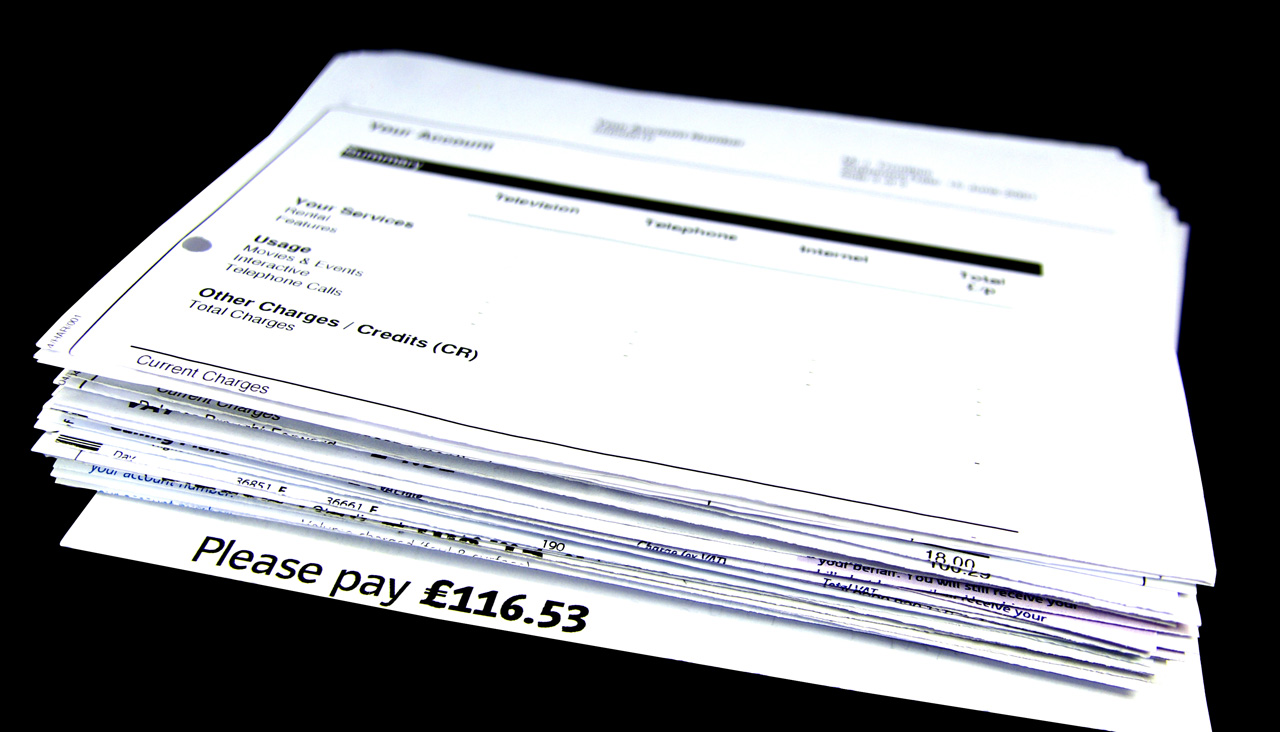
Manual invoice processing is quietly destroying your margins. Every paper invoice chased, every duplicate payment made, every late-fee incurred adds up to thousands of pounds lost - money that should be flowing to your bottom line instead of funding administrative chaos.
Accounts Payable Automation changes that. By replacing manual data entry, approval chasing and spreadsheet reconciliation with AI-driven capture, matching and payment workflows, modern AP platforms like OmniPATH give finance teams instant control over spend while drastically cutting processing costs.
What is Accounts Payable Automation?
Accounts Payable Automation replaces manual invoice handling with intelligent software that captures, validates, matches and routes invoices for approval without human intervention. Instead of finance staff typing invoice details into your ERP, chasing signatures or reconciling discrepancies in spreadsheets, the entire process runs automatically from the moment a supplier sends an invoice to the moment payment is scheduled.
Modern AP Automation platforms integrate directly with your existing ERP system, managing and/or processing purchase order data, matching against goods received notes and pushing approved invoices back for payment - all whilst maintaining a complete audit trail for compliance and external scrutiny.
The difference between basic OCR tools and true AP Automation lies in intelligence. Where OCR simply scans text, platforms like OmniPATH apply machine learning to understand invoice structures, validate data, flag anomalies and learn from corrections to improve accuracy over time.
Why does Manual AP hurt your margins?
Manual Accounts Payable processing costs UK businesses between £9 and £15 per invoice when you factor in data entry time, approval delays, error correction, and management oversight. For a business processing 500 invoices monthly, that's up to £90,000 annually spent on administration alone.
But the real cost becomes clear when you look at time. A single invoice takes around 12 minutes to process depending on complexity - but imagine a lengthy food order for a busy restaurant, where it could easily take longer. Either way, your finance team is looking at hours per invoice batch.
500 invoices would therefore require around 100 hours monthly. That's 12.5 days - almost half the available working time in a month if invoices are to be paid on schedule.
Sustainable? Hardly.
But the visible costs tell only half the story. Hidden losses compound the damage:
Late payment penalties accumulate when invoices sit in approval queues or get misfiled. A single missed early-payment discount on a £10,000 invoice typically costs 2%, or £200 in lost savings. Multiply that across dozens of suppliers and the opportunity cost becomes substantial.
Duplicate payments occur when the same invoice arrives via email and post, or when manual systems lack the cross-checking mechanisms to catch variations in invoice numbering. Studies suggest 0.1% to 0.8% of all invoices are paid twice - on a £5 million annual spend, that's up to £40,000 in duplicate payments that require recovery.
Supplier relationship strain emerges from slow payment cycles and query resolution. When finance teams spend their days firefighting rather than building partnerships, suppliers become less flexible on terms, pricing and support during supply chain disruptions.
Cash flow blindness prevents strategic decision-making when liabilities remain unknown until invoices are manually entered. Without real-time visibility into commitments, finance directors struggle to forecast accurately or negotiate better payment terms.
The tipping point typically arrives when operations scale. A single-site business processing 200 monthly invoices might manage manually, albeit inefficiently. But multi-site operations processing 2,000 invoices monthly hit a wall where manual processing becomes physically impossible without hiring additional staff - staff whose cost often exceeds the price of automation.
How OmniPATH's AI Engine Works
OmniPATH eliminates manual touchpoints through four core automation capabilities that work together to process invoices from receipt to payment scheduling.
Intelligent Invoice Capture
Traditional OCR scans text but understands nothing about invoices. OmniPATH combines optical character recognition with large language models trained specifically on financial documents.
Email attachments, browser uploaded files and scanned paper invoices all flow into a single intake queue. The AI extracts supplier details, line items, tax calculations and payment terms with 95+% accuracy, learning from corrections to improve recognition over time.
3-Way Match Automation
Every invoice automatically matches against its source purchase order and goods received note. OmniPATH compares quantities, prices and line descriptions, applying tolerance rules you define - perhaps allowing low-value items to auto-approve but requiring an elevated approval on high-value items.
The system assigns a confidence score to each match. Perfect matches flow straight to payment scheduling. Those with anomalies route to the appropriate approver with discrepancies highlighted. Invoices with no PO match are easily visible for validation ensuring there is no bypass of procurement control.
This isn't rigid rule-based matching that breaks when suppliers use slightly different item descriptions. The LLM layer understands that "Widget Assembly Kit" and "Complete Widget Set" likely refer to the same PO line item, whilst "Widget Maintenance Contract" does not - context that traditional matching engines miss entirely.
Approval Workflows and Audit Trails
Invoices route automatically based on amount thresholds. A £200 office supplies invoice might auto-approve if it matches a PO and passes 3-way validation. A £15,000 equipment purchase may require sign-off from both operations and finance. Invoices flagged with unusual patterns can also be routed for approval.
Approvers receive notifications with full context: the invoice image, PO history and direct user messaging. They can approve or query from any device in seconds, rather than waiting for paper to reach their desk or hunting through email attachments.
Every action creates an immutable audit record. Who approved what, when and why - all time-stamped and preserved for year-end audits, VAT inspections or supplier disputes. The trail extends beyond approvals to capture every system action: when the invoice arrived, which validation rules it triggered, any manual corrections made and eventual payment confirmation.
Integration Architecture
OmniPATH doesn't replace your ERP - it supercharges it. Native integrations with Sage, Xero and QuickBooks, mean invoices flow in, approvals happen outside your accounting system and approved invoices post back with complete coding and documentation attached.
The integration is bidirectional: OmniPATH can pull supplier master files from your ERP to enable matching, then push approved invoices back with the correct nominal codes, cost-centres and VAT treatment already applied. Your finance team never touches the ERP for routine processing, yet your general ledger remains the single source of truth.
Benefits of AP Automation
Implementing AP Automation delivers measurable improvements across four dimensions that matter to finance directors and CFOs.
Processing speed accelerates from days to hours. Manual workflows average five to seven days from invoice receipt to payment approval. OmniPATH reduces this to under 24 hours for standard invoices - many approve ready for scheduling automatically within minutes. This velocity unlocks early-payment discounts worth 2-3% that manual processes simply cannot capture consistently.
Cost reduction cuts invoice processing expenses by ~80%. Where manual processing costs £9-£15 per invoice, automation reduces this to under £2 by eliminating data entry, approval chasing and error correction. For businesses processing 1,000 monthly invoices, the annual saving exceeds £100,000 - enough to fund a senior finance hire or investment in growth initiatives.
Accuracy improvement eliminates the duplicate payments, coding errors and missed invoices that plague manual processing. OmniPATH's validation catches discrepancies before invoices enter approval workflows, whilst duplicate detection rules prevent the same invoice progressing further into your business. The result is a clean general ledger without the month-end reconciliation drama.
Real-time visibility transforms cash flow management from reactive to strategic. Finance teams see committed spend the moment invoices arrive, not weeks later when they're manually entered. Dashboards show liabilities by due date, supplier and custom dimensions - enabling better forecasting and payment scheduling that optimises working capital rather than simply paying everything on the 28th.
Supplier relationship enhancement improves negotiating position and supply chain resilience. Fast, accurate payment builds goodwill that translates to better pricing, flexible terms during market volatility and priority allocation when products are scarce. Suppliers who know you pay reliably become true partners rather than transactional vendors.
Compliance confidence provides auditors and stakeholders with complete, defensible records. Every invoice includes a full audit trail from capture through payment, with approvals, matches and exceptions documented automatically. VAT returns become straightforward when every invoice's tax treatment is validated and coded correctly from the start.
Who uses OmniPATH AP Automation?
OmniPATH serves three core user groups, each with distinct needs that the platform addresses through role-specific interfaces and permissions.
Finance teams gain control over the invoice-to-pay process without drowning in manual data entry. Controllers and AP managers configure approval workflows, monitor exception queues and maintain supplier master files from a central dashboard. Month-end closes accelerate when accruals are accurate and coding is clean from day one.
Procurement professionals ensure purchase orders flow smoothly through to payment whilst maintaining spending controls. OmniPATH's 3-way matching prevents maverick buying by flagging invoices without valid POs, whilst automated approval routing means urgent purchases don't languish awaiting sign-off.
CFOs and finance directors make better decisions with real-time visibility into committed spend and cash requirements. Executive dashboards surface spending patterns, highlight saving opportunities and track key metrics like days payable outstanding - all without requesting manual reports from overburdened finance teams.
Multi-site operators in hospitality, retail and healthcare find particular value in OmniPATH's ability to handle complex entity structures. Each location maintains its own approval hierarchy and cost centre coding whilst group finance sees consolidated liabilities and spending patterns across all sites. This combination of local autonomy and central visibility proves essential when managing dozens or hundreds of locations.
Frequently Asked Questions
Does OmniPATH support multi-entity setups?
Yes - each legal entity or location maintains its own approval workflows, cost centre structures and chart of accounts whilst group reporting consolidates across all entities. This allows site managers to approve their location's invoices independently whilst finance directors maintain visibility and control group-wide.
How accurate is the invoice capture compared to manual entry?
OmniPATH achieves 95+% field-level accuracy on invoices. Poor quality documents can vary accuracy but will improve over time as the AI learns from corrections. This exceeds typical manual data entry accuracy whilst eliminating transcription time entirely.
What happens when an invoice doesn't match its purchase order?
The system visually flags mismatched invoices enabling the appropriate approver to review with discrepancies highlighted - perhaps quantity received was less than invoiced, or pricing differs from the PO. The approver can accept the variance, reject the invoice for supplier correction or request investigation. Nothing posts to your accounts without explicit approval of exceptions.
Can we maintain our existing approval hierarchies?
Absolutely. OmniPATH configures to match your current approval structure, whether that's based on invoice amount, cost centre, supplier category or any combination of factors. You can also implement different rules for different entities - perhaps your retail locations have higher approval thresholds than your distribution centres.
How long does implementation typically take?
Most businesses are processing live invoices within a few days from contract signature. Implementation includes ERP integration, workflow configuration, supplier master profile creation, user training and parallel running. The timeline depends primarily on your ERP platform and the complexity of your approval workflows rather than invoice volume.
What about suppliers who send paper invoices?
Paper invoices need to be scanned or photographed which can then be processed identically to electronic ones. Some clients centralise scanning at head office, others scan at receiving locations - OmniPATH handles both approaches. The AI extracts data from scanned images with the same accuracy as digital PDFs.
Does this work with our supplier portal invoices?
Yes - you can forward portal notification emails to a dedicated address that triggers capture. Either way, portal invoices flow through the same validation and approval workflow as emailed PDFs.
Transform AP from cost centre to competitive advantage
Accounts Payable Automation isn't about replacing your finance team - it's about freeing them from administrative drudgery so they can focus on activities that actually improve margins. When invoice processing happens automatically in the background, your finance professionals spend their time negotiating better supplier terms, optimising cash flow and providing the strategic insights that drive growth.
The businesses that automate AP gain measurable advantages over competitors still processing invoices manually: faster access to early-payment discounts, better supplier relationships during supply chain disruptions, accurate real-time visibility for decision-making and lower operating costs that flow directly to improved margins.
OmniPATH delivers these benefits through AI that understands invoices, not just scans them - combining intelligent capture with automated matching, configurable approvals and seamless ERP integration into a platform that handles complexity whilst remaining simple to use.
Ready to see how it works for your business?
Book a 20-minute live demo where we'll process sample invoices in real-time, show you exactly how approval workflows would operate for your structure and demonstrate the visibility your finance team will gain. No sales pitch - just a practical demonstration of whether OmniPATH fits your specific AP challenges.